Jing Chen builds AI-native publishing systems and B2B research surfaces. The work connects buyer
research, content structure, automation, lead validation, risk checks, and public notes into quiet
websites that keep growing after launch and review gates.
Current focus is CRM-ready buyer memory, WordPress growth operations, overseas research intake,
report assembly, supplier evidence ledgers, sales narrative systems, and small operating notes
including live buyer reports and live ops
case notes on cjing.me.
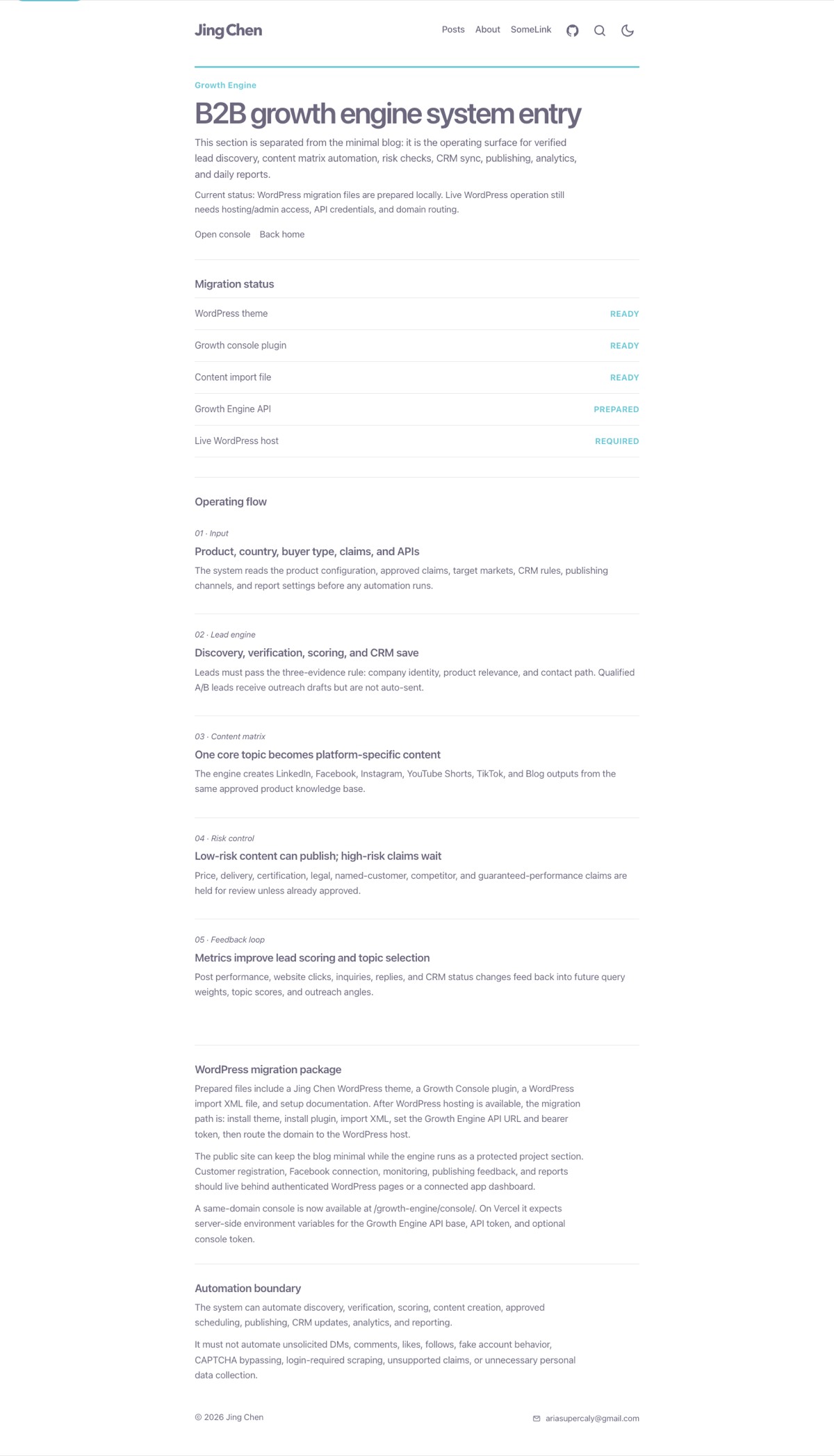
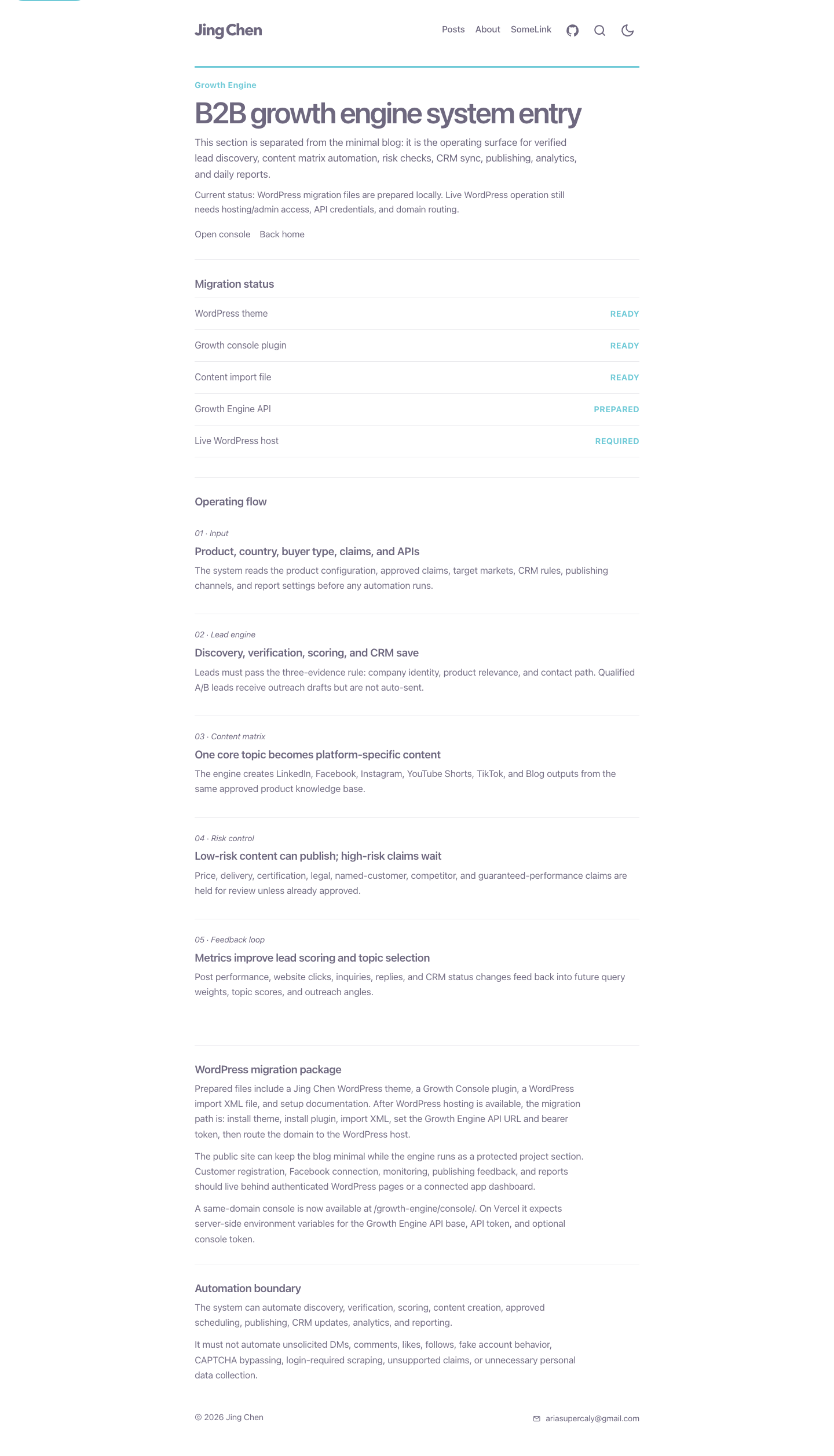
Growth Engine is a protected operating surface for lead validation, content queues, risk checks,
reports, and API status. It keeps research, production notes, and publication state in one compact place.
The console favors dry-run-first workflows, stable route maps, and reviewable outputs before production,
including the internal Console.
Approval notes stay close to each publishing cycle.
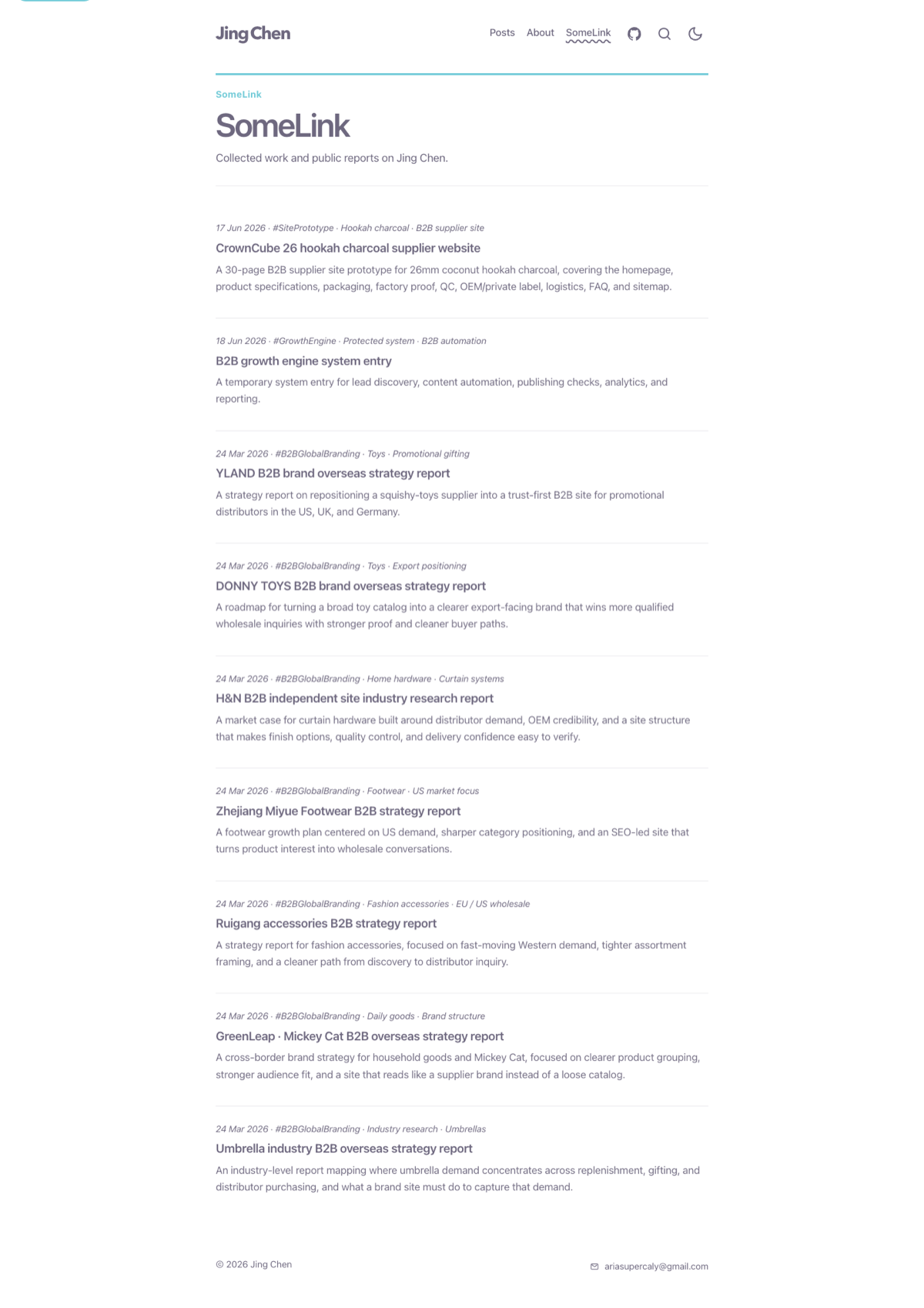
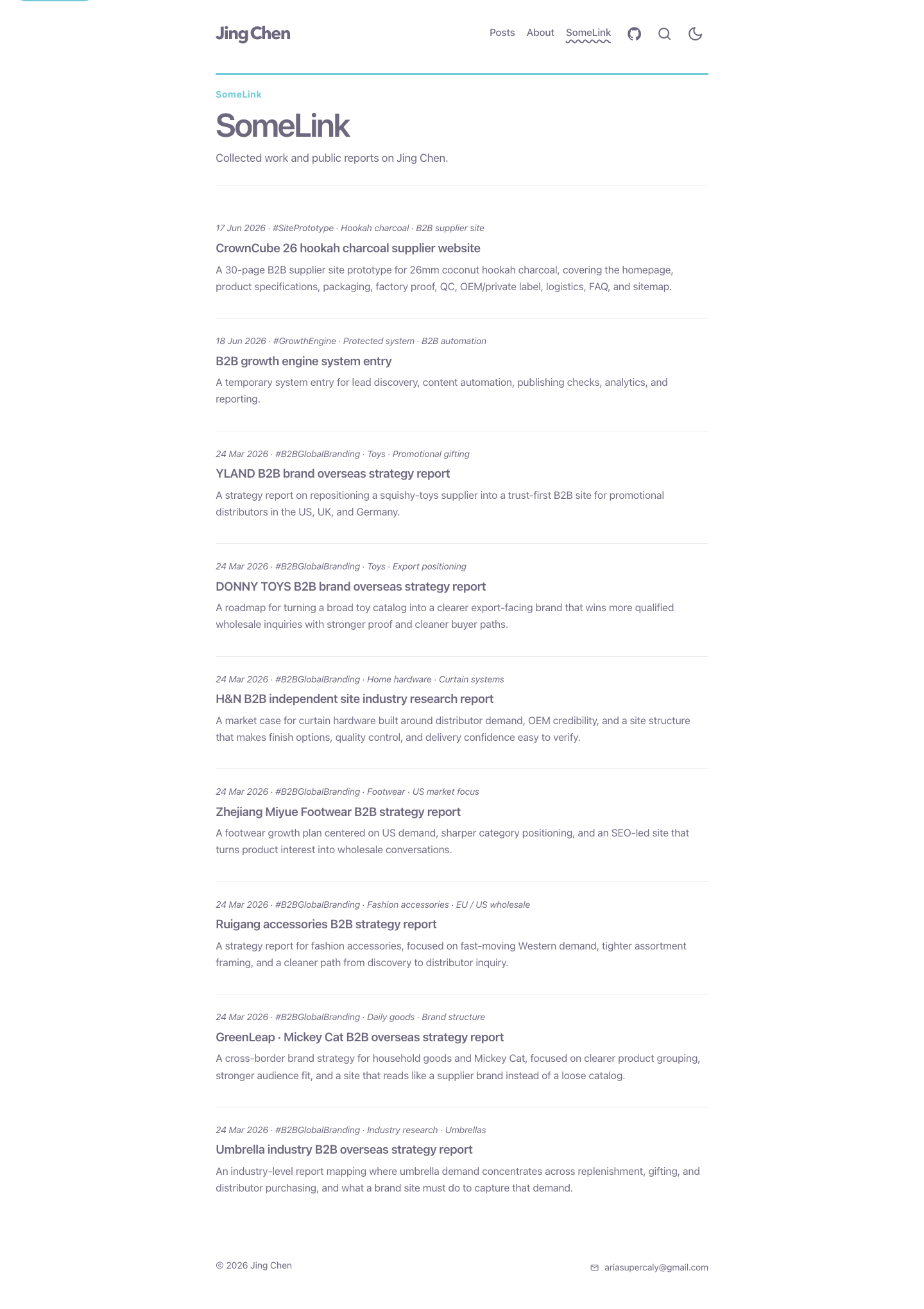
SomeLink collects B2B overseas strategy reports into a public archive. Each page turns supplier
clues, buyer intent, proof gaps, and independent-site priorities into a reusable sales narrative.
The structure is designed for repeated publication: category evidence, customer context, report
URLs, and next-step recommendations stay readable long after the first handoff.
CrownCube 26 is a supplier-site prototype for coconut hookah charcoal. It organizes specs,
packaging, QC, OEM, logistics, and proof for a buyer's first inspection.
The page clarifies what buyers need before inquiry, from production evidence to sample routes
and the supplier report.
The same model serves factories with dense proof requirements.
YLAND studies how a squishy-toys supplier becomes more legible to overseas buyers. The report
frames playful products through certification, factory capability, customization, and packaging proof.
The recommendation stack turns scattered proof into a site structure for scanning, comparison,
and procurement follow-up. Playful visuals stay close to the hard evidence sourcing teams need.
DONNY TOYS focuses on export positioning for toy buyers who need fast evidence. The work maps
product ranges, buyer objections, proof hierarchy, and category language into a clearer site direction.
The structure separates brand story from buyer utility, then reconnects them through quality signals,
inquiry paths, and reusable report sections. Each section stays scannable before it becomes persuasive.
H&N
Systems
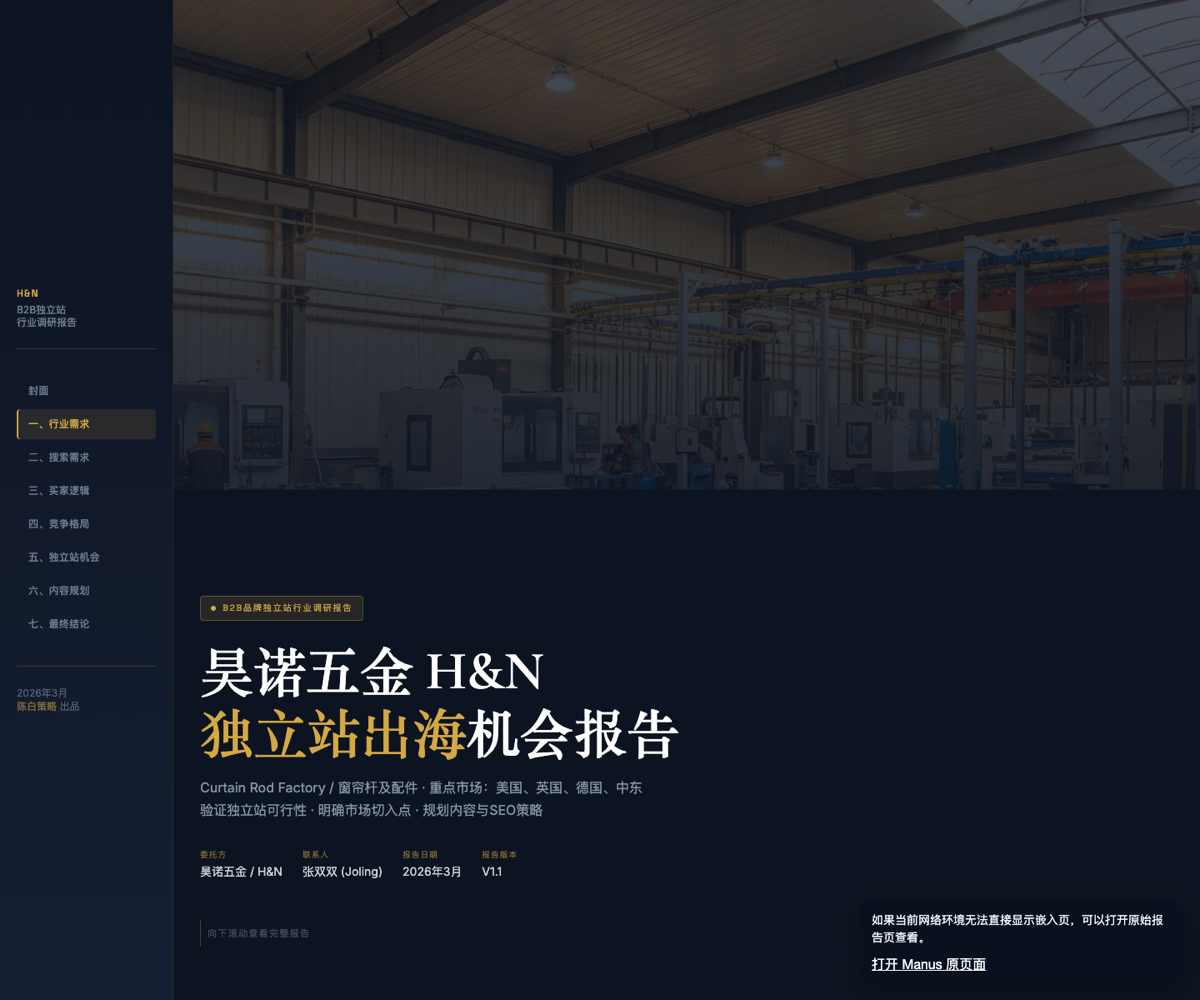
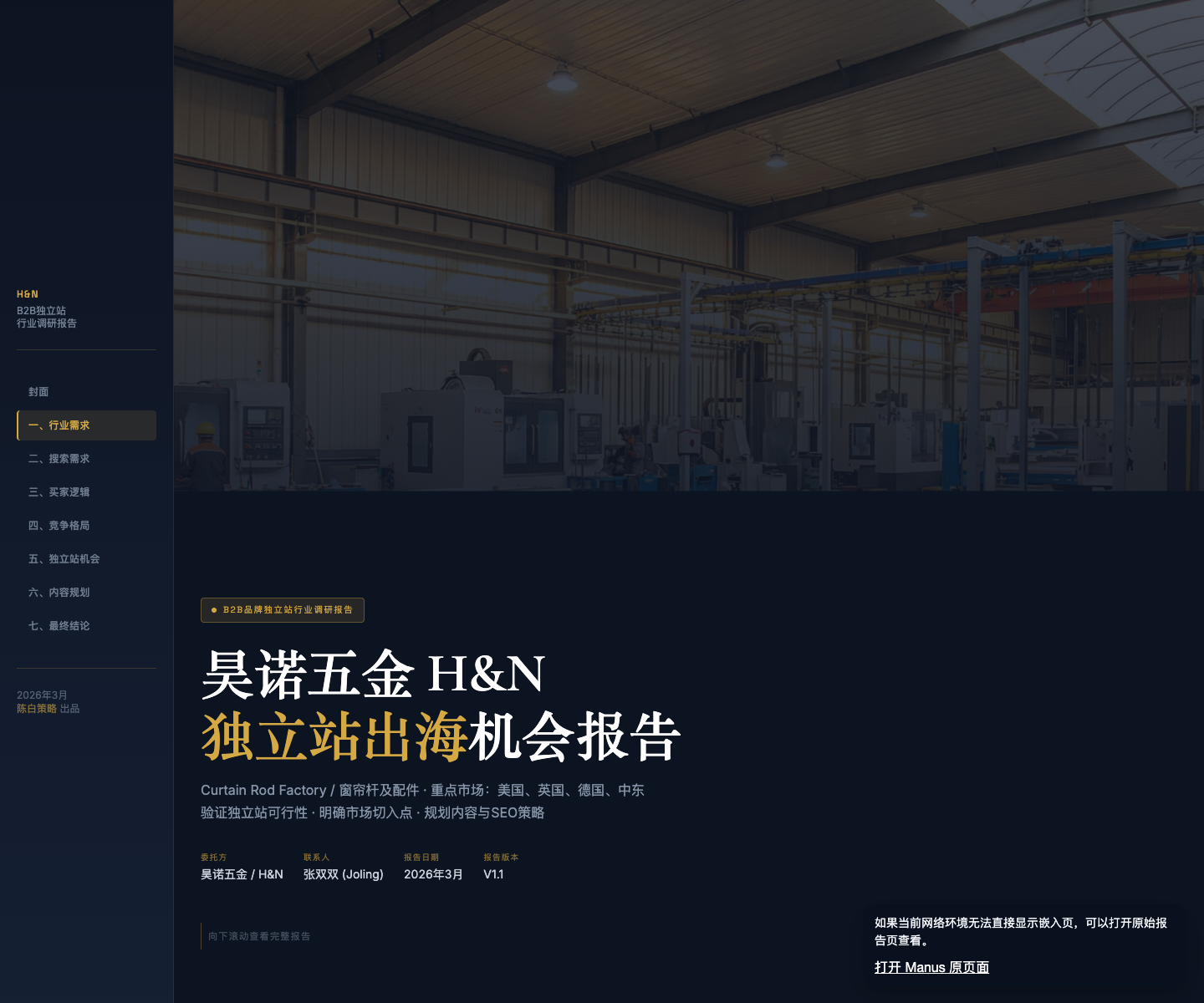
H&N maps curtain hardware demand, OEM credibility, and independent-site structure for a
supplier audience. It studies category language, installation concerns, material proof, and
purchase intent.
The report turns market clues into a practical web outline: what to show first, where proof
belongs, and how a buyer should move from product scan to inquiry.
Folded Hands
Writing
Folded Hands is a public note about posture, strategy, and selfhood. It uses one familiar social
symbol to read pressure, politeness, restraint, and staying internally clear.
The writing surface keeps essays close to cjing.me, so public notes, reports, and operating
decisions share one quiet archive. The page treats writing as another system surface, not a separate channel.